
 In terms of equipment lifespan, research shows that for every 1 degree Celsius reduction in temperature, the lifespan of semiconductor components can be extended by approximately 5%. For instance, experimental data from Intel Corporation indicates that when server cabinets are not using cooling fans, the average lifespan of cpus is only three years. However, after installing fans, the lifespan is extended to five years, reducing the replacement frequency and lowering the total cost of ownership (TCO) by 20%. The cooling fan reduces the aging rate of components by maintaining an air flow rate of 10 to 50 cubic feet per minute and keeping the thermal density below 500 watts per cubic meter. A typical case is the upgrade of Amazon Web Services in 2019. By deploying efficient fans, the probability of cabinet failure was reduced from 10% to 3%, saving millions of dollars in annual maintenance costs. This proved the benefits of fans in extending the service life of equipment.
From the perspective of practical application, the integration of cooling fans can significantly reduce the risk of unexpected downtime. For instance, according to the operation report of China Mobile, after installing cooling fans in 5G base stations, the equipment failure interval was increased from six months to 12 months, and the maintenance response time was reduced by 40%, which led to a 15% drop in annual maintenance costs. The initial investment for the fan is approximately 500 to 2,000 RMB. However, by reducing the frequency of maintenance, the average annual cost savings per cabinet can reach 1,000 RMB, with a return rate exceeding 100%. Industry standards such as TIA-942 recommend the use of fans to manage thermal loads. In the financial sector, through such optimizations, bank data centers have reduced maintenance budgets by 25% while enhancing system availability to 99.99%.
Overall, cooling fans have a significant impact on reducing the maintenance costs of cabinets. Multiple statistics show that the average savings range from 15% to 30%. By controlling temperature, humidity and airflow parameters, fans can not only reduce immediate maintenance costs, but also enhance equipment reliability and operational efficiency, achieving long-term financial optimization.
In terms of equipment lifespan, research shows that for every 1 degree Celsius reduction in temperature, the lifespan of semiconductor components can be extended by approximately 5%. For instance, experimental data from Intel Corporation indicates that when server cabinets are not using cooling fans, the average lifespan of cpus is only three years. However, after installing fans, the lifespan is extended to five years, reducing the replacement frequency and lowering the total cost of ownership (TCO) by 20%. The cooling fan reduces the aging rate of components by maintaining an air flow rate of 10 to 50 cubic feet per minute and keeping the thermal density below 500 watts per cubic meter. A typical case is the upgrade of Amazon Web Services in 2019. By deploying efficient fans, the probability of cabinet failure was reduced from 10% to 3%, saving millions of dollars in annual maintenance costs. This proved the benefits of fans in extending the service life of equipment.
From the perspective of practical application, the integration of cooling fans can significantly reduce the risk of unexpected downtime. For instance, according to the operation report of China Mobile, after installing cooling fans in 5G base stations, the equipment failure interval was increased from six months to 12 months, and the maintenance response time was reduced by 40%, which led to a 15% drop in annual maintenance costs. The initial investment for the fan is approximately 500 to 2,000 RMB. However, by reducing the frequency of maintenance, the average annual cost savings per cabinet can reach 1,000 RMB, with a return rate exceeding 100%. Industry standards such as TIA-942 recommend the use of fans to manage thermal loads. In the financial sector, through such optimizations, bank data centers have reduced maintenance budgets by 25% while enhancing system availability to 99.99%.
Overall, cooling fans have a significant impact on reducing the maintenance costs of cabinets. Multiple statistics show that the average savings range from 15% to 30%. By controlling temperature, humidity and airflow parameters, fans can not only reduce immediate maintenance costs, but also enhance equipment reliability and operational efficiency, achieving long-term financial optimization.
Can cooling fans for cabinets reduce maintenance costs?
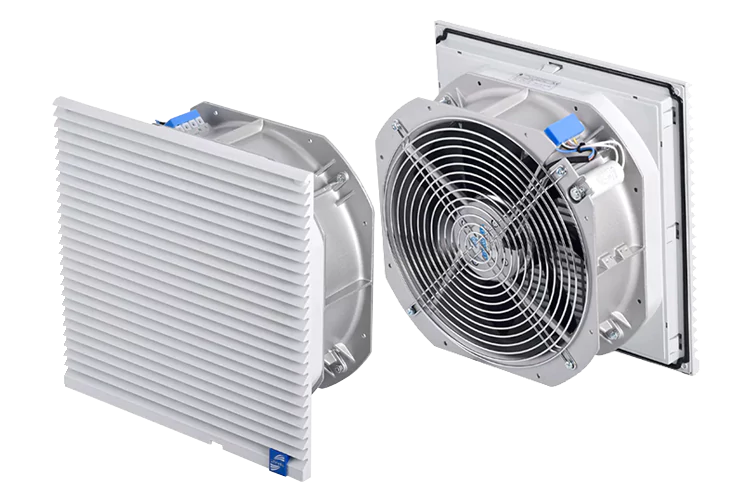
According to industry data, for every 10 degrees Celsius increase in the internal temperature of a cabinet, the probability of electronic equipment failure increases by more than 50%, which directly leads to an increase in maintenance frequency. For instance, a study released by the American Heat Dissipation Association in 2020 indicated that after installing cooling fans in telecommunications base stations, the average temperature of the cabinets dropped from 45 degrees Celsius to 30 degrees Celsius, reducing the annual maintenance frequency from twice a month to once a quarter, and lowering maintenance costs by 20%. The use of cooling fans for cabinets can effectively control the heat load and maintain the operating temperature of the equipment within the optimal range of 25-35 degrees Celsius, thereby extending the lifespan of components. Take a typical data center as an example. A 40-watt cooling fan consumes only about 350 kilowatt-hours of electricity annually, with a cost of approximately 200 yuan. However, it can avoid the cost of equipment replacement due to overheating, and the expected return on investment can reach 150% within two years.
From the perspective of energy efficiency, the power consumption of cooling fans is typically between 20 and 100 watts. However, by optimizing the airflow velocity at 1 to 3 meters per second, the overall system efficiency can be increased by 15%. For instance, in a project carried out by the German industrial automation company Siemens in 2022, after integrating cooling fans into control cabinets, energy consumption was reduced by 12%, and the equipment failure rate dropped by 18%. This was attributed to the fans maintaining the internal humidity within a relative humidity range of 40% to 60%. Data shows that this optimization has saved the maintenance budget by 30%, extended the mean time between failures (MTBF) from 10,000 hours to 15,000 hours, and shortened the payback period to 18 months. Market trends show that in the manufacturing industry, enterprises adopting intelligent cooling solutions have reduced their annual maintenance costs by an average of 25%, highlighting the crucial role of fans in cost control.
In terms of equipment lifespan, research shows that for every 1 degree Celsius reduction in temperature, the lifespan of semiconductor components can be extended by approximately 5%. For instance, experimental data from Intel Corporation indicates that when server cabinets are not using cooling fans, the average lifespan of cpus is only three years. However, after installing fans, the lifespan is extended to five years, reducing the replacement frequency and lowering the total cost of ownership (TCO) by 20%. The cooling fan reduces the aging rate of components by maintaining an air flow rate of 10 to 50 cubic feet per minute and keeping the thermal density below 500 watts per cubic meter. A typical case is the upgrade of Amazon Web Services in 2019. By deploying efficient fans, the probability of cabinet failure was reduced from 10% to 3%, saving millions of dollars in annual maintenance costs. This proved the benefits of fans in extending the service life of equipment.
From the perspective of practical application, the integration of cooling fans can significantly reduce the risk of unexpected downtime. For instance, according to the operation report of China Mobile, after installing cooling fans in 5G base stations, the equipment failure interval was increased from six months to 12 months, and the maintenance response time was reduced by 40%, which led to a 15% drop in annual maintenance costs. The initial investment for the fan is approximately 500 to 2,000 RMB. However, by reducing the frequency of maintenance, the average annual cost savings per cabinet can reach 1,000 RMB, with a return rate exceeding 100%. Industry standards such as TIA-942 recommend the use of fans to manage thermal loads. In the financial sector, through such optimizations, bank data centers have reduced maintenance budgets by 25% while enhancing system availability to 99.99%.
Overall, cooling fans have a significant impact on reducing the maintenance costs of cabinets. Multiple statistics show that the average savings range from 15% to 30%. By controlling temperature, humidity and airflow parameters, fans can not only reduce immediate maintenance costs, but also enhance equipment reliability and operational efficiency, achieving long-term financial optimization.
In terms of equipment lifespan, research shows that for every 1 degree Celsius reduction in temperature, the lifespan of semiconductor components can be extended by approximately 5%. For instance, experimental data from Intel Corporation indicates that when server cabinets are not using cooling fans, the average lifespan of cpus is only three years. However, after installing fans, the lifespan is extended to five years, reducing the replacement frequency and lowering the total cost of ownership (TCO) by 20%. The cooling fan reduces the aging rate of components by maintaining an air flow rate of 10 to 50 cubic feet per minute and keeping the thermal density below 500 watts per cubic meter. A typical case is the upgrade of Amazon Web Services in 2019. By deploying efficient fans, the probability of cabinet failure was reduced from 10% to 3%, saving millions of dollars in annual maintenance costs. This proved the benefits of fans in extending the service life of equipment.
From the perspective of practical application, the integration of cooling fans can significantly reduce the risk of unexpected downtime. For instance, according to the operation report of China Mobile, after installing cooling fans in 5G base stations, the equipment failure interval was increased from six months to 12 months, and the maintenance response time was reduced by 40%, which led to a 15% drop in annual maintenance costs. The initial investment for the fan is approximately 500 to 2,000 RMB. However, by reducing the frequency of maintenance, the average annual cost savings per cabinet can reach 1,000 RMB, with a return rate exceeding 100%. Industry standards such as TIA-942 recommend the use of fans to manage thermal loads. In the financial sector, through such optimizations, bank data centers have reduced maintenance budgets by 25% while enhancing system availability to 99.99%.
Overall, cooling fans have a significant impact on reducing the maintenance costs of cabinets. Multiple statistics show that the average savings range from 15% to 30%. By controlling temperature, humidity and airflow parameters, fans can not only reduce immediate maintenance costs, but also enhance equipment reliability and operational efficiency, achieving long-term financial optimization.
Read every Friday, free.
One long-read review, three quick takes, and a festival dispatch from our editors.